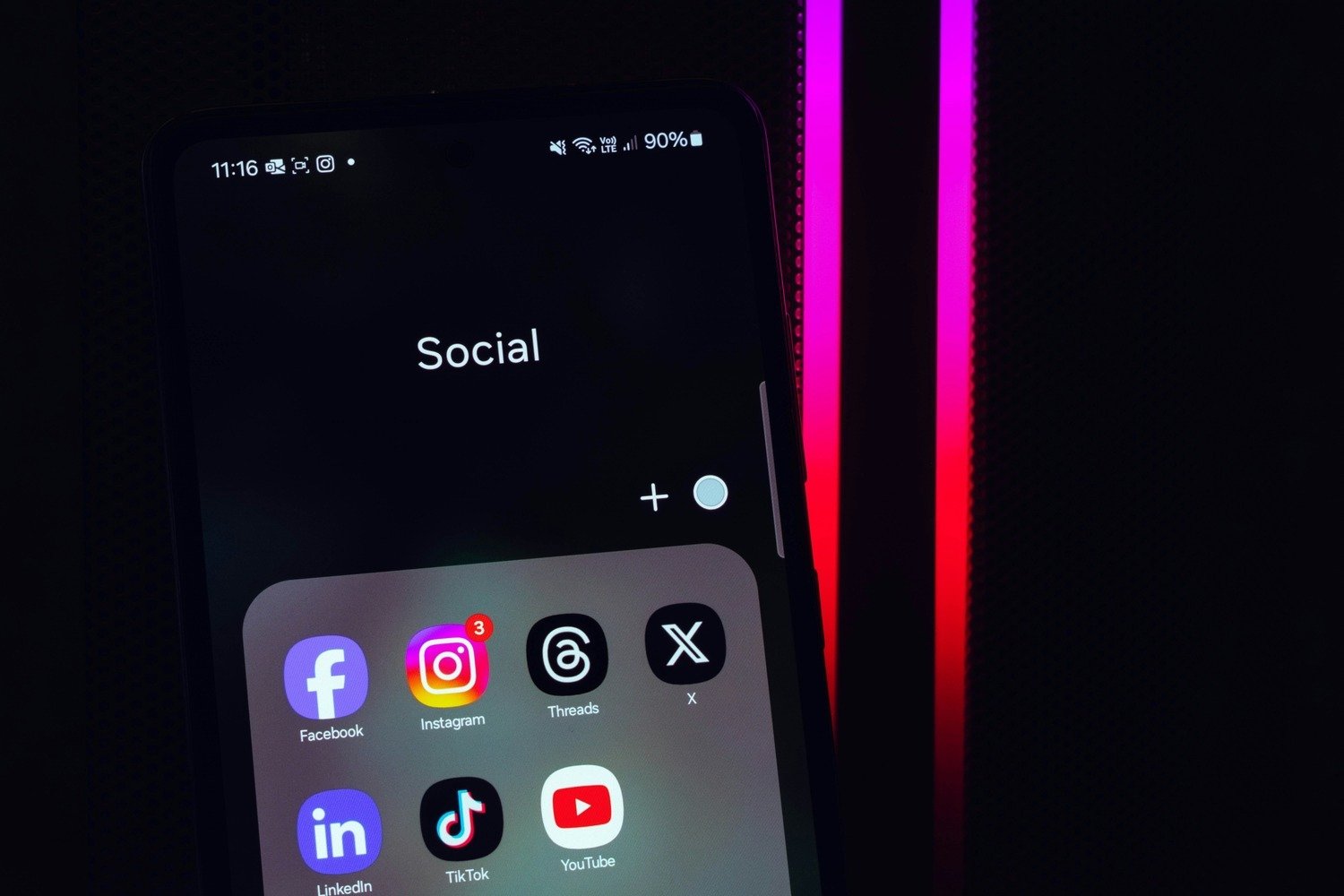
Predicting which social platforms will matter most in 2026 is, unfortunately for marketers, an exercise in managing uncertainty. The social ecosystem has become more volatile, shaped by regulatory pressure, geopolitical friction, AI-driven content, and major changes in how younger users engage online.
Social activity is fragmented across public feeds, semi-public spaces, and private communities. Many of these environments are insulated from traditional algorithms, creating pockets of activity that require new approaches. That’s why modern marketing will need to prioritize adaptability over platform loyalty.
Early experimentation, supported by tools like a VPN app for all major devices, will be useful for testing emerging platforms that may be region-locked. The next breakout app may come from Southeast Asia or Eastern Europe rather than Silicon Valley, and success could depend on being present before the mainstream audience follows.
Is performative social media finished?
In early 2025, The Guardian called Gen Z’s perception of their screentime “the age of regret”. They were the first generation to have not experienced life without smartphones. According to the New Britain Project, half of polled 16- to -24-year-olds have negative views of social media. And the effects will be apparent in the next generation: four of five of those polled intent to keep their own children away from it as long as possible if they become parents. The generation that follows will likely use social media even less than Gen Alpha.
What makes 2026 particularly unpredictable is the shift away from public self-broadcasting. Some 32% of teens actively limit social media use. When they do use it, they’re usually forgoing Facebook – the platform that a generation grew up on. While millennials and early Gen Z built their online identities on open social networks, younger users are embracing digital spaces designed for privacy and controlled interaction. They’re on Discord, WhatsApp, Telegram, Substack chat and member-only groups, and restricted and private subreddits. These platforms aren’t – yet, at least – the central focus of mainstream marketing narratives. For brands, the challenge is learning how to participate in these environments without compromising the culture that makes them appealing.
Traditional “feed-based” platforms are undergoing their own transformations. TikTok’s regulatory uncertainty in the US and Europe has created instability for marketing campaigns. Instagram has leaned into commerce and AI-curated discovery while grappling with stagnating younger-user engagement. Snapchat is popular among teens but overlooked by older marketers. X has become a less reliable engagement venue, increasingly dependent on niche subcultures and news cycles. No platform can be taken for granted as a primary marketing channel, even those with massive user bases.
There’s also a shift in video content. Audiences still consume TikTok videos and YouTube Shorts, but there’s growth happening in what might be called “ambient” or “passive” video: multi-hour streams and conversational podcasts that run in the background. Twitch appeals to viewers looking for a sense of authenticity and presence over virality, and YouTube’s huge pool of livestreams and video essays has made it arguably the most stable platform for creators seeking longevity.
Gaming or social media?
The line between gaming and social media has blurred so much that the distinction is almost meaningless. Roblox can’t really be called merely a gaming platform – it’s a huge network of user-made worlds where people gather, talk, build, trade, and socialize. The platform has around 79.8 million monthly players. Fortnite has evolved into a live entertainment venue, hosting concerts and interactive events that attract millions at once. Minecraft’s network of private and public servers acts as a patchwork of miniature societies, each with its own norms and internal culture.
Taken together, these ecosystems rival, and often surpass, the daily engagement of traditional social networks. But many marketers still treat them as fringe spaces, overlooking the fact that entire communities spend more time in these virtual worlds than on Instagram or X.
The picture becomes even more complicated when you consider regional differences. WeChat remains the standard for what a super-app can be, combining messaging, payments, commerce, and third-party tools in a single system. Douyin, the Chinese counterpart to TikTok, often introduces features, in-app shopping, enhanced search, and advanced editing tools, well before they appear in Western markets. Japan’s LINE is similar in combining communication, transactions, and services.
Brands willing to explore these spaces early, even if it means dealing with language barriers or relying on local partners, could learn about user behavior, expectations, and successful formats that may eventually shape global trends.
Creativity has found new homes
The internet’s creative pulse is shifting from the public feeds of the past (Facebook, Instagram, X) and toward more intimate, creator‑controlled spaces. The movement comes in part from a dissatisfaction with what some see as rented, unstable digital real estate – where algorithms change overnight and creators lose reach, or the platform’s priorities shift away from them.
A significant part of this shift is the resurgence of close‑knit, niche communities on Discord. Once mostly known for gaming, Discord has evolved into a place where people gather around shared interests: art, music, writing, hobbies – even mental health support and study groups.
A 2025 academic study described how Discord’s structure fosters “third‑place” social experiences – spaces between home and work where people can hang out, chat informally, share thoughts and build relationships. In these environments, creativity works differently. Rather than chasing viral reach and algorithms, creators and participants communicate in a lower-pressure, more conversational way.
Many creators are stepping back from posting on massive, algorithm‑driven platforms. Instead, they’re reviving the older ethos of personal websites, newsletters, blogs. In other words, spaces they have more control over.
And as one writer quoted by Creative Boom attested, quitting social apps can improve creators’ mental health: less screen time, better sleep, fewer distractions, more creative headspace.
In the early days of social media, inspiration and discovery often came through broadly curated feeds: friends, acquaintances, friends-of-friends, and public posts. But this funnel relied on a large audience and passive consumption. In 2026 a hybrid approach may be more common. Creators can keep a minimal presence on mainstream platforms, but the bulk of their media work , the community, the deep engagement , lives on their own site, or in closed or privately managed communities.
Inspiration can come from shared spaces: group chats, private servers, niche communities. People are more likely to discover ideas via conversations, small‑group sharing, or intimate exchanges, rather than polished posts intended for mass consumption.
Meanwhile, technological changes are reshaping creation itself. Platforms (including the old giants) are integrating AI-assisted tools to help creators generate content faster and more flexibly.
Monetization in private spaces
Discord servers, subscription newsletters, Patreon communities, and other controlled environments offer a more direct connection between creators and their most engaged fans. Unlike traditional ad-supported platforms, these spaces allow for more predictable revenue streams.
Creators can offer membership tiers, exclusive content, early access to projects, and in some cases digital collectibles like NFTs, though the latter’s 2020 and 2021 hype wasn’t matched in 2025. These approaches give fans a sense of ownership and participation while providing creators with a steady income. For brands, private spaces offer opportunities for partnerships that, when managed well, feel less like advertising and more like collaboration.
The popular Twitch and YouTube streamer ARIatHOME, a musician who improvises while walking the streets of New York and other cities, offered an intriguing example of brand partnership. Ari used Formula 1 sounds from the F1 25 video game in his improvised beats, talking openly with his viewers about the partnership. Sponsored content doesn’t necessarily have to disrupt a community. It will always change it to an extent, but it needn’t feel intrusive.
Monetization in more private spaces could change the marketing mindset. Instead of chasing TikTok numbers and mass impressions, brands and creators can focus on engagement quality. Communities could become a primary metric of success alongside follower counts. The shift to private monetization will reflect broader cultural changes. Younger users are increasingly skeptical of mainstream advertising and prefer direct, authentic connections.
Digital wellness – building trust with Gen Z and Alpha
In 2026, social media usage will be shaped more by an awareness of its effects on mental health. Young users are questioning the value of constant public sharing and algorithm-driven feeds. Many experience social media as a source of anxiety, comparison, and distraction.
For marketers, this shift could be decisive. Traditional strategies that rely on creating fear of missing out or constant notifications may no longer resonate. It will be important to prioritize wellness and ethical engagement; marketers who do will likely see better long-term results.
Younger users will hope for a move away from manipulative tactics and towards more meaningful interactions. Campaigns that educate, entertain, or support communities without pressuring them to stay online may be most successful. It will be important to respect users’ boundaries. Private and semi-private online spaces require sensitivity to community norms and consent. Users, especially those spending much of their time online, quickly notice when brands appear intrusive or out of touch with a culture.
Disclosing sponsored content, avoiding deceptive practices, and creating environments where users feel safe to engage without pressure will be important. The approach will seem slower and less flashy than chasing viral success, but it may be necessary with more users prioritizing their personal well-being.
In practice, this could mean designing campaigns that encourage breaks, promote creativity, or provide tools for healthier online habits. It also means giving creators autonomy rather than treating them solely as content generators. As social media continues to fragment and private spaces grow, marketing that respects digital wellness is ethical but also a competitive advantage, with users more selective about their attention.
Preparing for 2026
The social landscape in 2026 will be defined by fragmentation, experimentation, and shifting audience values. Traditional platforms alone won’t guarantee reach or engagement. Marketers will need to be agile, able to test new spaces and adapt their strategies quickly. The fragmentation of social media will require an understanding that audiences exist across various types of environments. Some are public and algorithm-driven, others private and community-focused, and many are hybrid spaces that blur social, gaming, and entertainment. It will be more difficult to measure marketing success, but that may be unavoidable.
A key principle will be experimentation. Early adoption of emerging platforms, particularly those with niche but highly engaged user bases, can offer insights into trends before they reach the mainstream. Marketers will need to adopt a mindset of testing, learning, and iterating quickly, while appreciating the culture of each space. Overzealous campaigns could quickly alienate subreddits and Discord channels, for example, and therefore damage brand perception.
Flexibility will be important. Features, user behavior, and regulations will all change again in 2026. Marketers’ strategies should combine presence across multiple channels with tailored approaches.
The brands that embrace flexibility and experimentation will survive the next wave of social change – and also find opportunities to connect deeply with audiences in ways that older models of marketing couldn’t achieve.
Takeaways
In summary, social media is no longer a single, predictable landscape but a patchwork of experiences shaped by privacy, community, and generational values. The era of mass public feeds is waning; young users are turning to private servers, niche communities, and hybrid spaces.
This fragmentation challenges marketers to rethink the metrics and models that defined success. Reach and impressions alone are insufficient. Instead, meaningful engagement, active participation, shared experiences, and community trust, will likely become a more important measure. Brands that approach these spaces with sensitivity, respect for digital wellness, and ethical transparency can build genuine connections rather than temporary visibility.
AI and technological tools are reshaping creation, allowing for faster experimentation, personalized experiences, and new forms of content discovery. It’s too early to call which platforms will manage the influx of AI best, amid discussions around user control, experience, and data collection.
Ultimately, the next phase of social media may reward patience as much as agility. Early adoption of new spaces will offer insights, but understanding community norms, cultural context, and user priorities will be equally important. Social media has changed – and it’s a question of keeping up.
Brands that will thrive across fragmented platforms are the ones applying growth marketing principles - running experiments across channels rather than committing budget to any single platform.