If you’re a B2B marketing leader tired of chasing thousands of unqualified leads, you’re not alone. Over the past few years, account-based marketing agency services have rapidly evolved and grown in popularity, with new technologies and strategies transforming how companies target and engage key accounts. In 2026, roughly 71% of B2B marketers have active account-based marketing programs, and a growing number are partnering with specialized account-based marketing agencies. To prove their value internally, marketing leaders are turning to ABM ROI models that CFOs can evaluate directly.
This guide walks you through what ABM agencies actually do, how they structure their services, what you can expect to pay, and how to evaluate whether a partnership makes sense for your business. By the end, you’ll have a clear roadmap for selecting one of the top ABM companies that can deliver world class marketing services to help your sales and marketing teams close bigger deals faster.
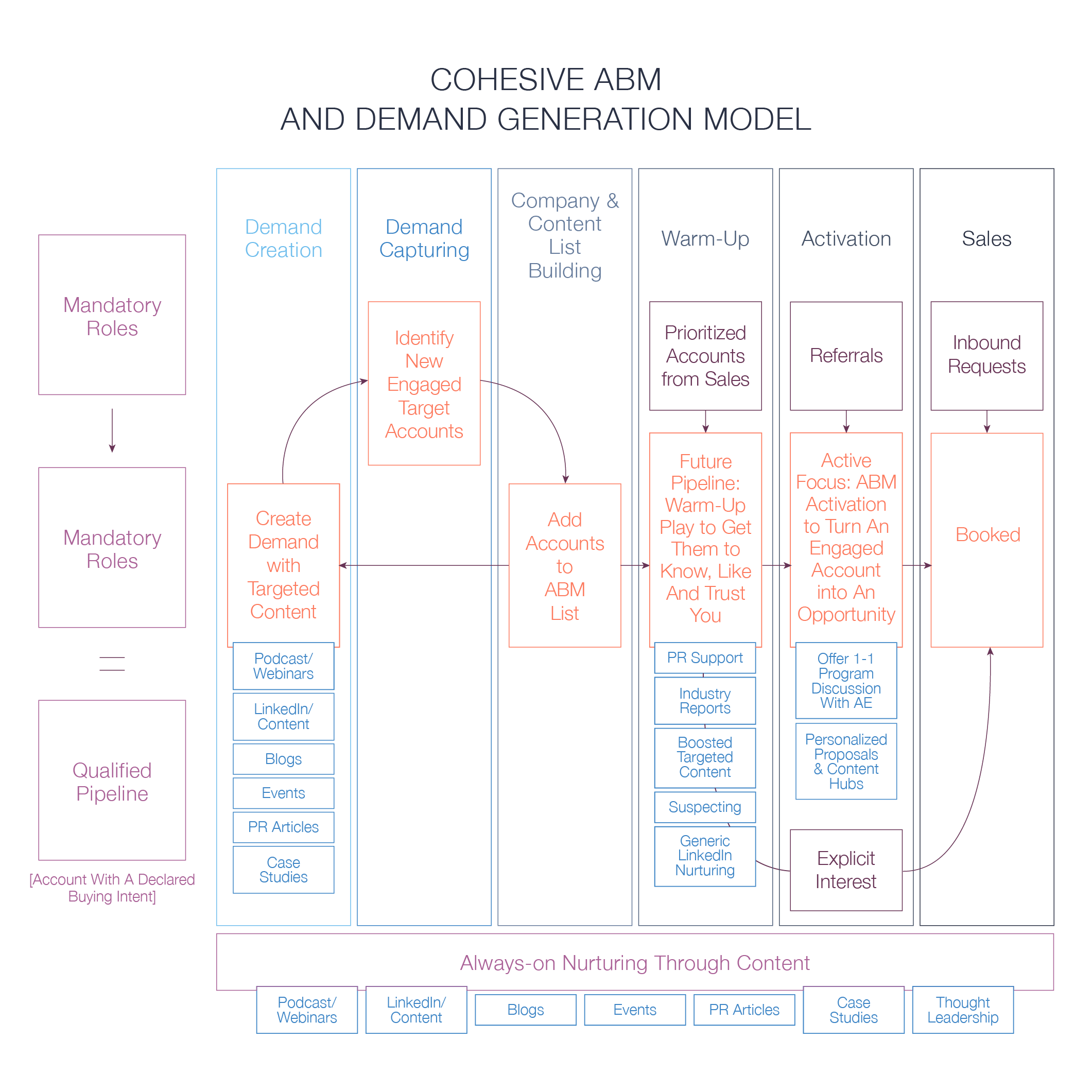
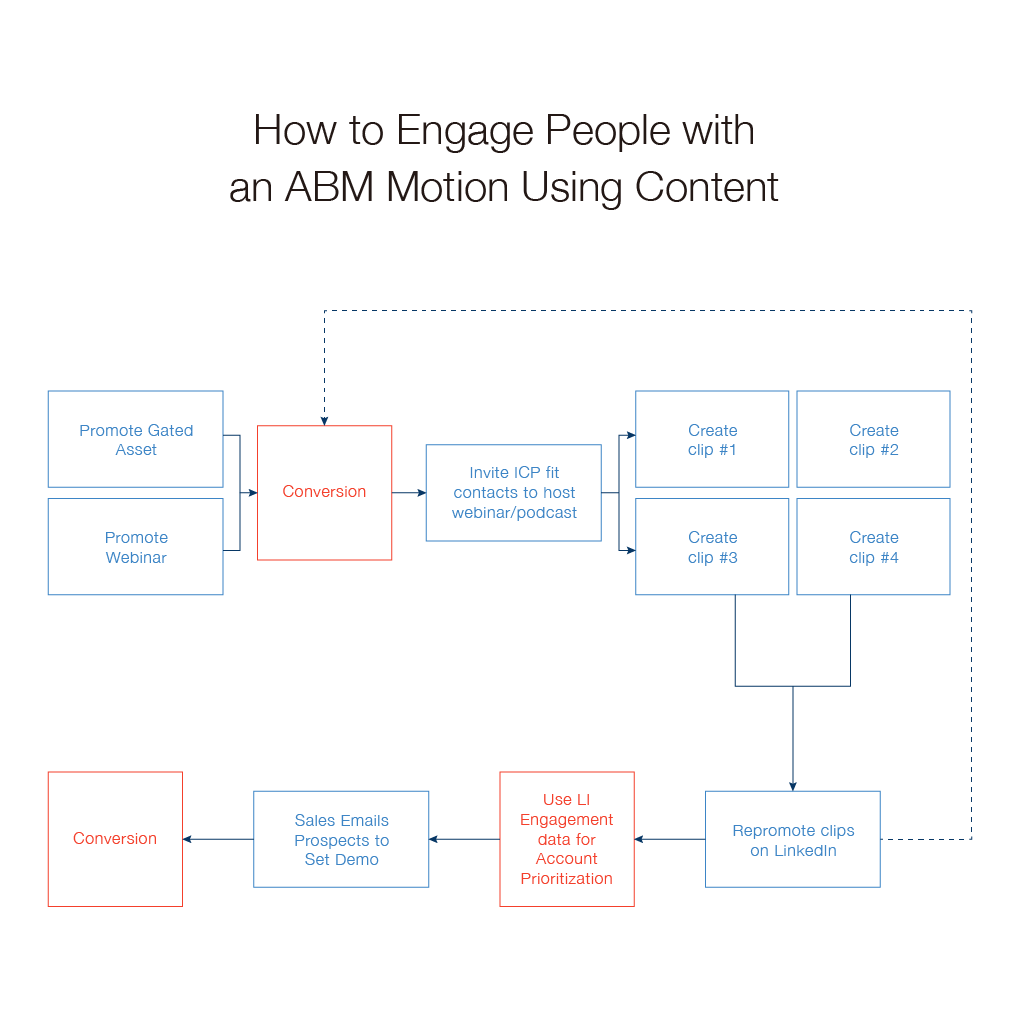
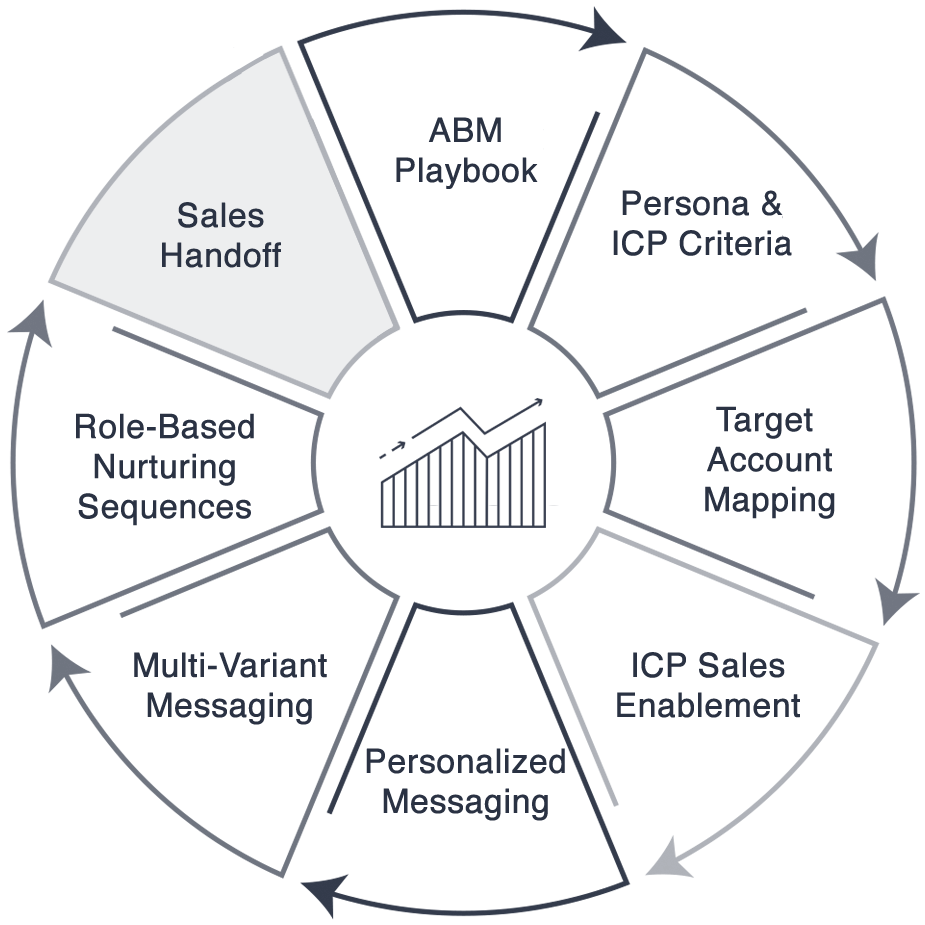
Regardless of which ABM agency you choose to execute account-based marketing services, the diagram below outlines a cohesive ABM and demand generation model that is scalable for enterprise ABM.
What Is an Account Based Marketing Agency?
An account-based marketing agency is a specialized B2B firm that helps companies identify, engage, and convert a clearly defined list of high-value target accounts. An ABM company is a specialized firm that provides tailored account-based services, acting as a strategic partner to deliver industry-specific solutions that drive B2B marketing success. Rather than casting a wide net with generic demand generation campaigns, these agencies focus your marketing efforts on the specific accounts most likely to become profitable accounts.
ABM agencies have evolved beyond simple “spray and pray” tactics. They now operate as strategic partners that work closely with your revenue team to build personalized campaigns for individual accounts or small clusters of similar businesses. Before engaging one, use our guide on how to choose an ABM agency to build your evaluation criteria. An account-based marketing company develops and executes customized ABM strategies to target high-value accounts, showcasing expertise in identifying profitable clients and delivering tailored marketing campaigns across various industries. The core premise is simple: treat each target account as a market of one.
How ABM Agencies Differ from Generic Digital Marketing Agencies?
The distinction between an account-based marketing agency and a traditional digital marketing firm comes down to several key factors:
- Account selection over lead volume: ABM agencies start with a defined list of key accounts rather than trying to attract anyone who might convert.
- Deep sales alignment: They work embedded with sales teams, often attending weekly standups and joint planning sessions.
- Multi-contact personalization: Instead of single-point-of-contact campaigns, they map out strategies for entire buying committees (often 6-10 stakeholders per account).
- Longer engagement cycles: Enterprise deals can take 6-12 months, and ABM agencies plan accordingly with sustained, multi-touch journeys.
- Full service agency capabilities: A full service agency offers end-to-end ABM solutions, including strategy, technology, data, and sales integration to help clients achieve better business results.
Typical ABM Agency Clients
Account-based marketing agencies generally serve:
- B2B SaaS providers with annual contract values (ACV) above $50,000
- Industrial manufacturers with complex, long-cycle purchasing decisions
- Professional services and consulting firms where each engagement represents significant revenue
- Mid-market to enterprise tech companies targeting strategic accounts
These ABM agencies operate inside sophisticated ecosystems, integrating with CRMs and marketing automation platforms, clean revenue operations infrastructure is essential for this to work including Bombora, 6sense, and ZoomInfo. They often help clients select and integrate specific marketing software, such as analytics tools and platform integrations, to optimize ABM campaigns.
Why does this matter now? Buying committees have expanded, deals have grown more complex, and organizations face pressure to demonstrate revenue impact, not just lead counts. ABM agencies exist to solve this exact problem.
Evaluating Agency Expertise
Selecting the right ABM agency is a critical step in ensuring the success of your account-based marketing initiatives. A top-tier ABM agency should demonstrate deep expertise in both the strategic and tactical aspects of account-based marketing. This includes a thorough understanding of account-based marketing tactics, the ability to conduct extensive marketing research, and a proven track record of designing personalized campaigns that resonate with specific accounts.
When evaluating potential partners, look for account-based marketing agencies that excel at developing a robust ABM strategy tailored to your target audience. They should be adept at leveraging marketing automation, predictive analytics, and intent data to identify and prioritize high-value opportunities. For a closer look at how intent data works, from first-party to third-party signals, see this guide to B2B intent data. The top ABM agencies combine these technologies with valuable insights gained from extensive research, ensuring that every campaign is grounded in data and aligned with your business objectives.
A reputable ABM agency will also have experience executing successful ABM campaigns across a variety of industries and account types. Ask for case studies or examples that showcase their ability to generate engagement and deliver results for businesses similar to yours. By partnering with an ABM agency that brings both strategic vision and hands-on expertise, you can confidently pursue account based marketing programs that drive meaningful outcomes for your organization.
How Top ABM Agencies Structure Engagements and Pricing?
Pricing and engagement models vary widely across the ABM agency market. This section provides realistic expectations for 2025 partnerships. For a reference point on how retainer-based ABM agency pricing is typically structured, our pricing page outlines our engagement tiers.
Typical Engagement Structures
|
Engagement Type
|
Duration
|
Purpose
|
|
Strategy-only projects
|
6-12 weeks
|
ICP development, playbook creation, tiering
|
|
Pilot programs
|
3-6 months
|
Test ABM in one vertical or region
|
|
Ongoing retainers
|
12+ months
|
Full program deployment and optimization
|
Common Pricing Models
- Monthly retainers: Fixed fee covering strategic planning, execution, and reporting
- Project-based fees: One-time payment for playbook development or strategy workshops
- Hybrid models: Retainer plus performance components tied to pipeline or revenue targets
- Percentage of ad spend: Less common but used by some agencies for paid media management
Concrete Pricing Ranges
- Boutique ABM agencies serving mid-market clients typically charge $3,000-$8,000 per month
- Full-service enterprise 1:1 programs often exceed mid five-figure monthly retainers
- Hidden costs include creative production, data procurement, and media spend (which can add 40-60% to core agency fees)
- A specialized ABM agency provides strategic ABM services for B2B clients, focusing on personalized, growth-oriented approaches that can influence pricing structures.
What’s Usually Included in a Retainer
- Ongoing strategic planning and account selection
- Campaign execution across agreed channels
- Creative asset development
- Monthly or bi-weekly reporting dashboards
- Regular optimization cycles and check-ins
Key Items to Clarify in Your Scope of Work
Before signing, ensure your statement of work addresses:
- Number of target accounts by tier
- Channels included (email, LinkedIn, display, direct mail, etc.)
- Personalization expectations per account/tier
- Reporting cadence and attribution methodology
- Client-side responsibilities (sales follow-up, content approvals)
- Exit or transition clauses
Leading ABM Agencies In 2026
In the ever-evolving landscape of B2B marketing, selecting the right ABM agency can be a game-changer. The agencies listed here have been meticulously chosen based on their effectiveness, innovative strategies, and ability to deliver tailored solutions that align with business goals.
These top ABM companies primarily serve sectors like technology, healthcare, and financial services, ensuring that their expertise generation solutions is well-rounded and industry-specific.
From integrating ABM with account-based Sales to providing end-to-end services, this ABM company is set to lead the charge in 2026.
1. 310 Creative
Company Overview:
310 Creative is a B2B marketing agency specializing in account-based marketing for growth-focused companies. Founded in 2003 and headquartered in Santa Monica, California, the agency helps B2B organizations generate pipeline and revenue by aligning marketing and sales around targeted account strategies. 310 Creative works with industries such as SaaS, professional services, manufacturing, and technology companies that require structured demand generation programs designed to reach high-value decision makers and buying committees.
Methodology & Services:
310 Creative’s methodology centers on account based marketing programs that combine inbound demand generation with targeted account outreach. The agency develops integrated ABM campaigns that identify ideal customer profiles, prioritize target accounts, and deliver personalized marketing and sales engagement across multiple channels. Core services include account-based marketing strategy, account research and segmentation, persona driven content creation, targeted digital advertising, email outreach campaigns, marketing automation, CRM integration, and sales enablement. These programs are designed to help B2B companies increase engagement with high value prospects, shorten sales cycles, and improve conversion from marketing qualified accounts to revenue.
Market Position & Brand Perception:
310 Creative positions itself as a strategic ABM growth partner that helps companies move beyond traditional lead generation toward targeted pipeline development. Its expertise in account-based marketing, marketing automation, and CRM platforms such as HubSpot enables the agency to integrate account targeting with broader digital demand generation strategies. The agency emphasizes transparency, performance reporting, and measurable pipeline impact, making it particularly well suited for B2B organizations with complex sales processes and defined target account lists.
Pros & Cons
Pros:
-
Strong focus on account based marketing strategies for B2B revenue growth
-
Integration of ABM with inbound marketing, automation, and CRM systems
-
Experience supporting complex B2B sales cycles and multi stakeholder buying groups
-
Emphasis on measurable pipeline development and sales alignment
Cons:
-
ABM programs typically require significant internal coordination between marketing and sales teams
-
Retainer based engagement model may require sustained marketing investment
-
Best suited for companies with clearly defined target accounts and structured sales processes rather than broad lead generation needs
2. The ABM Agency
Company Overview:
ABM Agency is a specialized B2B account-based marketing agency that helps enterprise and growth stage companies generate pipeline and revenue by targeting high value accounts with personalized marketing and sales engagement. Founded in 2017 and headquartered in Atlanta, Georgia, the agency works with technology, cybersecurity, SaaS, manufacturing, and professional services organizations that sell to complex buying committees. ABM Agency focuses exclusively on account based strategies designed to align marketing and sales around the most valuable opportunities rather than broad lead generation.
Methodology & Services:
ABM Agency’s methodology centers on data driven account targeting and personalized engagement across the entire buyer journey. The agency develops ABM programs that begin with ideal customer profile development, account identification, and buyer intent analysis to prioritize high value prospects. Core services include account based marketing strategy, account research and segmentation, targeted digital advertising, email outreach and nurture programs, content personalization, marketing automation, CRM integration, sales enablement, and pipeline analytics. Campaigns are designed to create coordinated engagement across marketing and sales channels to increase account penetration, accelerate deal velocity, and improve win rates.
Market Position & Brand Perception:
ABM Agency positions itself as a pure play account based marketing partner focused on helping B2B companies build scalable ABM programs rather than executing isolated campaigns. Its exclusive focus on ABM allows the agency to develop specialized expertise in account targeting, personalization, and cross channel engagement strategies. The firm typically works with mid market and enterprise companies that have defined target account lists and complex sales cycles, providing strategic guidance and operational execution designed to drive measurable pipeline growth.
Pros & Cons
Pros:
-
Exclusive focus on account based marketing strategy and execution
-
Strong alignment between marketing programs and enterprise sales processes
-
Integrated services including targeting, personalization, advertising, and sales enablement
-
Emphasis on pipeline growth, deal velocity, and revenue impact
Cons:
-
Best suited for companies with defined target account lists and enterprise sales models
-
ABM programs typically require coordination across marketing, sales, and revenue operations teams
-
Engagements often involve ongoing investment to build and scale account based programs rather than short term campaigns
3. New North
Company Overview:
New North is a B2B marketing agency focused on technology and SaaS companies that helps organizations generate qualified pipeline through targeted digital marketing and account-based engagement. Founded in 2008 and headquartered in Frederick, Maryland, the agency works primarily with small to mid market B2B companies that sell complex products or services to defined accounts. New North positions itself as an extension of internal marketing teams, delivering both strategy and execution to help companies reach decision makers within high value target organizations.
Methodology & Services:
New North’s methodology centers on account-based marketing programs designed to reach specific companies and buying committees with personalized messaging and coordinated outreach. The agency develops ABM strategies that begin with ideal customer profile development, account selection, and buyer persona research. Core services include targeted content creation, digital advertising campaigns focused on priority accounts, email marketing, marketing automation, website optimization, SEO, and CRM reporting integration. These programs are designed to increase engagement with target organizations, support sales outreach, and improve conversion from target account engagement to pipeline and revenue.
Market Position & Brand Perception:
New North positions itself as a collaborative B2B growth partner that combines account-based marketing with broader demand generation strategies. The ABM agency is particularly suited for technology and SaaS companies that want to complement inbound lead generation with targeted outreach to high value prospects. Its emphasis on transparency, collaborative workflows, and data driven reporting helps client teams maintain visibility into performance and account engagement across campaigns. Engagements are typically structured as ongoing partnerships focused on continuous optimization and measurable pipeline growth.
Pros & Cons
Pros:
-
Experience implementing account based marketing for B2B technology and SaaS companies
-
Integrated approach combining ABM with inbound marketing and digital demand generation
-
Collaborative working model that integrates with internal marketing and sales teams
-
Emphasis on measurable pipeline generation and account engagement
Cons:
-
Not exclusively focused on ABM, which may limit specialization compared to pure ABM agencies
-
Retainer based engagement model may require sustained marketing investment
-
May require strong internal alignment between marketing and sales teams to maximize ABM effectiveness
Company Overview:
Cremarc is a B2B account-based marketing agency that helps companies generate pipeline and accelerate revenue by targeting high value accounts with coordinated marketing and sales engagement. The agency focuses on organizations with complex sales cycles and multiple stakeholders involved in purchasing decisions. Cremarc works with industries such as technology, financial services, healthcare, and professional services, helping companies align marketing and sales around clearly defined target account strategies designed to increase deal size and win rates.
Methodology & Services:
Cremarc’s ABM methodology centers on strategic account targeting and personalized engagement programs designed to influence buying committees within priority accounts. The agency begins with ideal customer profile development, account selection, and buyer persona research to identify the most valuable opportunities. Core services include account-based marketing strategy, account research and segmentation, targeted digital advertising, personalized content development, email outreach campaigns, marketing automation, CRM integration, and sales enablement. Campaigns are designed to create coordinated touchpoints across marketing and sales channels that increase engagement with target organizations and accelerate pipeline conversion.
Market Position & Brand Perception:
Cremarc positions itself as a specialist ABM partner for B2B companies seeking structured account engagement programs rather than broad lead generation campaigns. Its focus on account level targeting, personalization, and collaboration between marketing and sales teams makes it particularly suited for organizations that sell to enterprise accounts or defined vertical markets. Engagements are typically designed as ongoing partnerships that build scalable ABM programs capable of delivering measurable pipeline growth and improved account penetration.
Pros & Cons
Pros:
-
Strong focus on account-based marketing strategy and execution for B2B organizations
-
Emphasis on personalized engagement with buying committees inside target accounts
-
Integration of marketing campaigns with sales outreach and CRM systems
-
Designed to increase pipeline quality, deal size, and win rates
Cons:
-
Best suited for companies with defined target account lists and enterprise sales models
-
Requires strong coordination between marketing, sales, and revenue operations teams
-
Engagements typically involve ongoing investment to build and scale ABM programs rather than short term campaigns
5. Directive Consulting
Company Overview:
Directive Consulting is a B2B performance marketing agency founded in 2014 and headquartered in Irvine, California. The agency works primarily with SaaS and technology companies to generate qualified pipeline and revenue through data driven ABM strategies. Directive positions itself as a growth partner that aligns marketing investment directly with revenue outcomes rather than traditional lead volume metrics. The firm serves mid market and enterprise organizations that require targeted engagement with high value prospects and complex buying committees.
Methodology & Services:
Directive’s methodology incorporates account-based marketing programs that combine targeted demand generation with revenue focused performance marketing. The agency begins with ideal customer profile development, account identification, and intent data analysis to prioritize high value target companies. Core services include account-based advertising, targeted content creation, paid search and paid social campaigns focused on key accounts, personalized landing pages, marketing automation, CRM integration, and sales enablement support. These initiatives are designed to increase engagement with decision makers, improve account penetration, and accelerate pipeline creation and deal velocity.
Market Position & Brand Perception:
Directive positions itself as a revenue focused marketing partner that blends account based marketing with broader performance marketing strategies such as SEO, paid media, and conversion optimization. Its Customer Generation methodology emphasizes aligning marketing activities with measurable pipeline and customer acquisition outcomes. The agency is particularly well suited for B2B technology and SaaS companies that want to integrate targeted account strategies with scalable digital acquisition programs. Engagements are typically structured as ongoing partnerships designed to drive sustained pipeline growth and measurable return on marketing investment.
Pros & Cons
Pros:
-
Strong focus on account-based marketing combined with performance driven demand generation
-
Expertise working with SaaS and technology companies with complex buying committees
-
Integrated services including targeted advertising, content, automation, and sales enablement
-
Emphasis on pipeline growth, revenue attribution, and customer acquisition metrics
Cons:
-
Broad service portfolio means ABM is one component of a larger performance marketing strategy rather than the sole focus
-
Programs may require significant marketing investment and internal alignment between sales and marketing teams
-
Best suited for mid market and enterprise organizations rather than very small businesses or startups
Company Overview:
The Smarketers is a B2B marketing agency focused on inbound marketing and account-based marketing strategies for companies with complex sales cycles. Founded in 2013 and headquartered in Hamburg, Germany, the agency works with technology, SaaS, manufacturing, and professional services organizations that need to generate pipeline by targeting specific high value accounts. The Smarketers emphasizes alignment between marketing and sales teams to create coordinated engagement with key decision makers and buying committees.
Methodology & Services:
The Smarketers’ methodology centers on account-based marketing programs that integrate targeted outreach with inbound demand generation. The agency begins by defining the ideal customer profile, selecting target accounts, and developing buyer personas to guide personalized engagement strategies. Core services include account-based marketing strategy, targeted content development, email outreach campaigns, digital advertising directed at priority accounts, marketing automation, CRM integration, and sales enablement. These initiatives are designed to increase engagement within target organizations, support sales prospecting efforts, and convert high-value accounts into qualified opportunities and revenue.
Market Position & Brand Perception:
The Smarketers positions itself as a specialized partner for companies seeking to align marketing and sales through structured ABM programs. Its focus on combining inbound marketing with targeted account outreach allows organizations to attract interest while also proactively engaging strategic accounts. The agency often works with companies entering new markets or pursuing enterprise customers where personalized engagement is critical. Engagements are typically structured as ongoing partnerships that support continuous account engagement and pipeline growth.
Pros & Cons
Pros:
-
Strong focus on account based marketing combined with inbound demand generation
-
Emphasis on marketing and sales alignment for engaging complex buying committees
-
Integrated services including content, digital advertising, automation, and sales enablement
-
Well suited for companies targeting enterprise or strategic accounts
Cons:
-
ABM programs require clear target account lists and strong collaboration between marketing and sales teams
-
Retainer based engagements may require sustained marketing investment
-
Combination of inbound and ABM strategies may require longer timelines to achieve measurable pipeline results
Company Overview:
Konstruct Digital is a B2B digital marketing agency that helps companies generate qualified pipeline through targeted demand generation and account focused marketing strategies. Founded in 2012, the agency works primarily with B2B organizations in industries such as SaaS, manufacturing, professional services, and industrial technology. Konstruct Digital positions itself as a strategic partner that helps companies engage high value prospects and buying committees through coordinated digital marketing programs designed to support revenue growth.
Methodology & Services:
Konstruct Digital’s methodology incorporates account-based marketing principles within broader B2B digital demand generation strategies. The agency begins by defining ideal customer profiles, identifying target accounts, and researching buyer personas to guide personalized marketing and sales engagement. Core services include targeted digital advertising, SEO, content marketing, account-focused messaging, marketing automation, CRM integration, website optimization, and sales enablement. Campaigns are designed to reach decision makers within priority organizations through personalized content and targeted digital channels that support both marketing and sales outreach.
Market Position & Brand Perception:
Konstruct Digital positions itself as a B2B growth partner that integrates account based engagement with inbound and performance marketing strategies. Its approach allows companies to combine organic demand generation with targeted outreach to high value accounts. The agency emphasizes transparency, collaborative planning, and performance reporting that connects marketing activities with pipeline generation and revenue outcomes. Engagements are typically structured as ongoing partnerships focused on continuous optimization and long term growth.
Pros & Cons
Pros:
-
Experience applying account based marketing strategies within broader B2B digital marketing programs
-
Integrated services including SEO, paid advertising, content marketing, automation, and sales enablement
-
Focus on engaging high value accounts and improving pipeline quality
-
Emphasis on transparency and measurable marketing performance
Cons:
-
Not exclusively focused on account based marketing compared to specialized ABM agencies
-
Retainer based engagement model may require ongoing marketing investment
-
Effective ABM execution may require strong internal coordination between marketing and sales teams
Company Overview:
Heinz Marketing is a B2B marketing strategy and revenue growth consultancy founded in 2008 and headquartered in Redmond, Washington. The firm works with B2B organizations across industries such as SaaS, technology, manufacturing, and professional services to improve pipeline generation and revenue performance. Heinz Marketing focuses heavily on aligning marketing, sales, and customer success teams around shared revenue objectives. Its consulting approach often includes developing structured ABM programs designed to engage high-value target accounts and accelerate enterprise sales cycles.
Methodology & Services:
Heinz Marketing’s methodology centers on account-based marketing and revenue operations strategies that integrate marketing and sales engagement across the full buyer journey. The firm begins with ideal customer profile development, account selection, and buyer persona research to identify priority organizations. Core services include ABM strategy development, pipeline acceleration programs, marketing automation and CRM optimization, sales enablement, demand generation planning, analytics and attribution modeling, and go-to-market strategy. These programs are designed to improve account engagement, strengthen alignment between marketing and sales teams, and increase the conversion of target accounts into qualified opportunities and closed revenue.
Market Position & Brand Perception:
Heinz Marketing positions itself as a strategic advisor for B2B organizations implementing account-based marketing and revenue growth frameworks. The firm is well known for its thought leadership in demand generation, pipeline management, and marketing sales alignment. Its consulting model is particularly suited for companies that want to design or scale ABM programs internally while improving revenue operations processes. Engagements typically focus on strategic planning and program development, often complemented by guidance on technology platforms and performance measurement.
Pros & Cons
Pros:
-
Strong expertise in account-based marketing strategy and revenue operations alignment
-
Emphasis on aligning marketing, sales, and customer success teams around pipeline growth
-
Deep thought leadership in B2B demand generation and revenue performance
-
Well suited for organizations implementing structured ABM programs at scale
Cons:
-
Consulting focused model may provide less hands on campaign execution compared to traditional agencies
-
ABM strategy programs often require internal marketing and sales teams to implement recommendations
-
Best suited for mid market and enterprise B2B organizations with defined target accounts and complex sales cycles
Company Overview:
SeeResponse is a B2B demand generation and ABM agency that helps technology and SaaS companies generate qualified pipeline and accelerate revenue through targeted marketing and sales engagement programs. Founded in 2007 and headquartered in Dallas, Texas, the agency works with startups, mid market companies, and enterprise organizations seeking to reach specific high-value accounts and buying committees. SeeResponse focuses on aligning marketing and sales activities to create consistent engagement with decision makers throughout complex B2B buying cycles.
Methodology & Services:
SeeResponse’s methodology centers on account-based marketing strategies that combine targeted outreach with data driven demand generation. The agency begins with ideal customer profile development, account identification, and buyer persona research to prioritize high value target companies. Core services include account-based marketing strategy, account research and segmentation, personalized email outreach campaigns, targeted digital advertising, content development, marketing automation, CRM integration, lead nurturing programs, and sales enablement support. Campaigns are designed to generate engagement with key stakeholders inside target organizations and convert those interactions into qualified opportunities and revenue.
Market Position & Brand Perception:
SeeResponse positions itself as a specialized ABM and demand generation partner for B2B technology companies that want to build structured programs for engaging strategic accounts. Its integrated approach combines account targeting with multi channel marketing and sales outreach to create coordinated engagement across the buyer journey. The agency is particularly well suited for SaaS and technology companies with defined target markets and enterprise sales models. Engagements are typically structured as ongoing programs focused on measurable pipeline growth and improved sales conversion.
Pros & Cons
Pros:
• Strong focus on account-based marketing for B2B technology and SaaS companies
• Integrated services including targeted outreach, digital advertising, content, and automation
• Emphasis on aligning marketing campaigns with sales engagement strategies
• Designed to increase pipeline quality and conversion from target accounts
Cons:
• ABM programs require clear target account lists and strong coordination between marketing and sales teams
• Retainer based engagements may require sustained marketing investment
• Best suited for organizations with complex sales cycles and defined enterprise target markets rather than broad lead generation needs
Company Overview:
UnboundB2B is a B2B demand generation and account-based marketing agency that helps technology companies identify, engage, and convert high-value target accounts into qualified pipeline and revenue. Founded in 2017 and headquartered in San Francisco, California, the company focuses on supporting SaaS, cybersecurity, cloud, and enterprise technology providers that sell to complex buying committees. UnboundB2B positions itself as a growth partner that combines data intelligence, targeted outreach, and marketing automation to drive engagement with strategic accounts.
Methodology & Services:
UnboundB2B’s methodology centers on account-based marketing programs supported by data-driven targeting and multi channel engagement. The agency begins by defining ideal customer profiles, identifying target accounts, and mapping buying committees within those organizations. Core services include account-based marketing strategy, intent data analysis, account research and segmentation, targeted digital advertising, email outreach, appointment setting, content syndication, marketing automation, and CRM integration. Campaigns are designed to generate engagement with decision makers and influencers inside priority accounts while supporting sales teams with qualified meetings and opportunities.
Market Position & Brand Perception:
UnboundB2B positions itself as a specialized ABM and demand generation partner for B2B technology companies seeking structured programs to reach enterprise prospects. The agency emphasizes combining data intelligence with personalized engagement strategies to improve account penetration and accelerate deal cycles. Its programs are typically designed for organizations pursuing enterprise customers and strategic accounts that require coordinated marketing and sales outreach. Engagements are commonly structured as ongoing partnerships focused on building consistent pipeline from target accounts.
Pros & Cons
Pros:
-
Strong focus on account-based marketing for B2B technology and SaaS companies
-
Integrated services including account targeting, intent data, outreach campaigns, and appointment setting
-
Designed to increase engagement with enterprise buying committees and strategic accounts
-
Emphasis on measurable pipeline creation and sales qualified meetings
Cons:
-
ABM programs require defined target account lists and coordination between marketing and sales teams
-
Engagement models often require ongoing investment to build sustained pipeline programs
-
Best suited for companies targeting enterprise or strategic accounts rather than broad inbound lead generation strategies
Key Services Offered by Top ABM Agencies
Core Services Offered by Account Based Marketing Agencies
Understanding what an account-based marketing company actually delivers day-to-day helps you set realistic expectations. Here’s what buyers can expect when engaging an agency for account-based marketing services. ABM agencies provide a comprehensive range of ABM services, including strategy development, campaign execution, and performance analysis, all tailored to drive results for B2B organizations.
Strategic Services
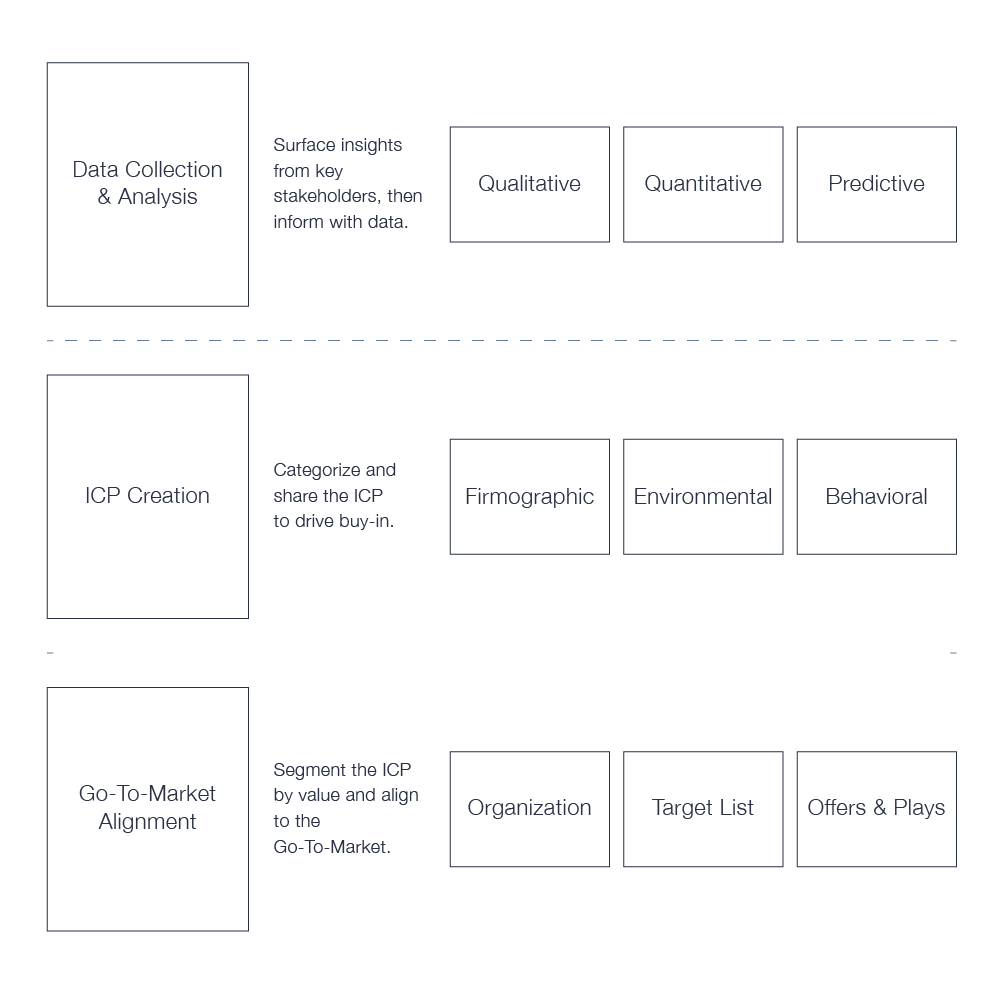
- Ideal Customer Profile (ICP) Definition: Agencies document the demographic, firmographic, technographic, and behavioral traits of your best-fit customers.
- Total Addressable Market (TAM) Analysis: They quantify the opportunity size across geographies, industries, or verticals.
- Tiered Account Segmentation: Accounts are sorted into 1:1 (highest touch), 1:few (cluster-based), and 1:many (scalable) tiers based on deal potential and strategic importance.
These are some of the key services offered by ABM agencies, such as account profiling, campaign management, and performance reporting, which are essential for effective account-based marketing.
Account Selection and Prioritization
Building a target account list isn’t guesswork. Agencies use:
- Firmographic data (company size, revenue, industry)
- Technographic data (what tools or technology stack companies currently use)
- Intent data from providers like Bombora, G2, or 6sense to identify accounts actively researching solutions
The best ABM firms combine multiple data sources to prioritize accounts showing genuine buying signals, not just demographic fit.
Campaign Planning Services
- Message frameworks and value propositions tailored to each segment
- Multi-touch journey mapping across 3-9 month enterprise sales cycles
- Touchpoint planning across email, display ads, LinkedIn, direct mail, and events
Lead generation is a core outcome of effective ABM campaigns, helping organizations attract and convert high-value prospects.
Execution Services
Account-based marketing campaigns require hands-on execution:
- Personalized email sequences tailored to individual stakeholders
- LinkedIn and display ads targeted at named accounts
- Direct mail or gifting in high-touch 1:1 programs
- Custom landing pages or microsites for specific verticals
- Sales enablement content: executive briefs, technical documentation, and pitch decks
ABM agencies deliver tailored solutions for different industries and client needs, ensuring each campaign aligns with specific business objectives.
Analytics and Optimization
- Building ABM dashboards to track account engagement and pipeline influence
- Measuring KPIs: meetings booked, opportunities created, ACV, win rates
- Running quarterly strategy reviews to iterate on messaging and channels
Strategy development and ABM strategy development are ongoing processes that agencies use to refine and improve ABM campaigns, ensuring continuous optimization and better results.
Technology Advisory and Implementation
Many agencies help clients select and configure their tech stack, including ABM platforms (Demandbase, 6sense, Terminus, RollWorks), CRM integrations, intent data providers, and reporting tools.
Types of ABM Programs: 1:1, 1:Few, and 1:Many
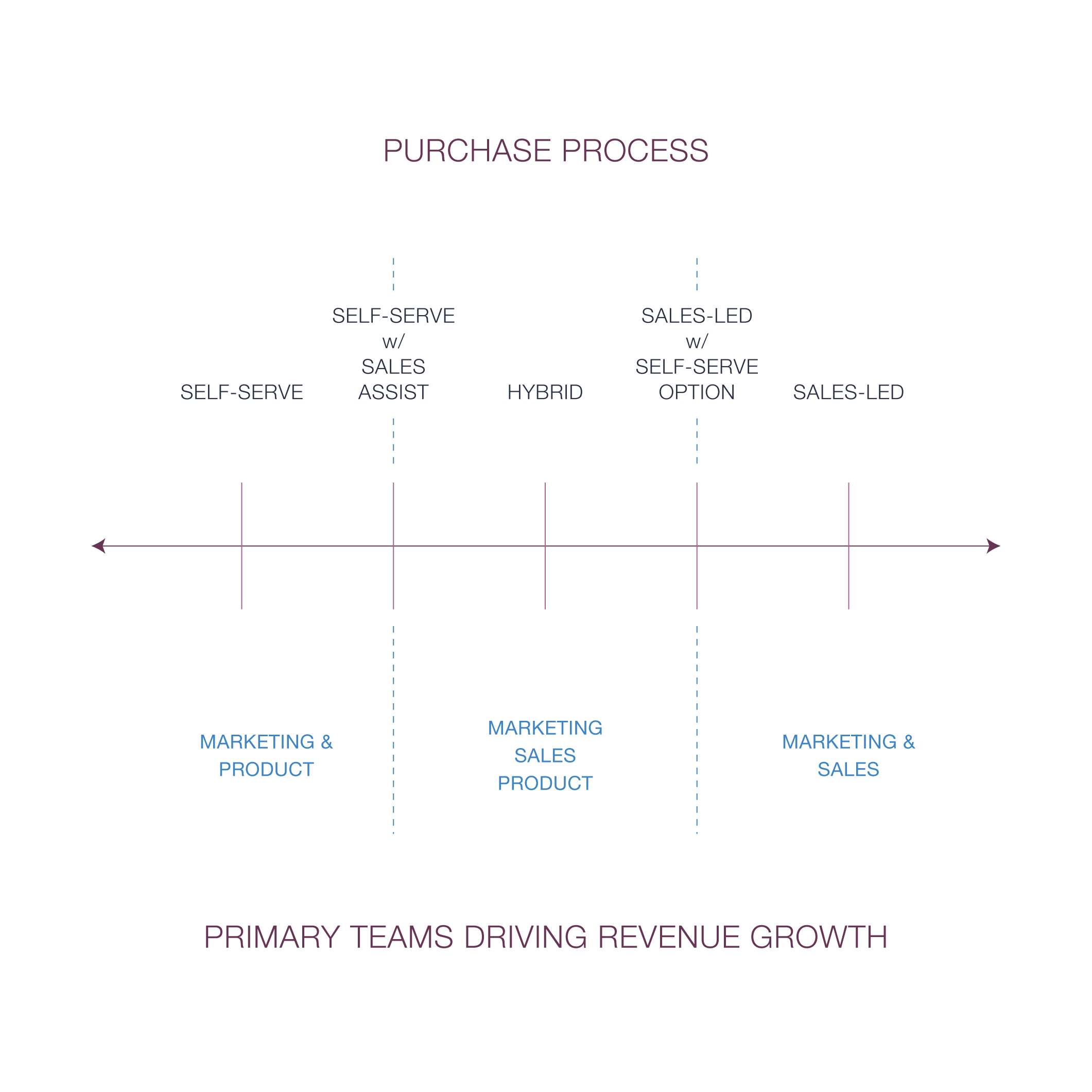
Not all ABM programs look the same. ABM agencies typically design a mix of approaches based on account value and sales capacity. Account based marketing agencies excel at targeting high value accounts through tailored ABM models. Understanding these models helps you align expectations with your business objectives.
1:1 ABM (Strategic ABM)
This is the most high-touch, resource-intensive approach. It targets a small number of strategic accounts, usually fewer than 20 with:
- Individual research per account
- Custom content and microsites
- Executive outreach and personalized campaigns
- Sometimes custom events or direct executive engagement
1:1 ABM makes sense when deal sizes justify the investment, often $200K+ ACV.
1:Few ABM (Cluster-Based ABM)
This approach groups 30-100 accounts by shared attributes:
- Same industry vertical (healthcare, financial services)
- Similar challenges or use cases
- Geographic region
Messaging is partially shared but customized per cluster. This balances personalization with efficiency.
1:Many ABM (Programmatic ABM)
Scalable and technology-driven, 1:many programs target hundreds or thousands of named accounts using:
- Dynamic ads with personalization tokens
- Modular content templates
- Automated sequences triggered by intent signals
How Agencies Decide Which Model to Use
The choice depends on three factors:
|
Factor
|
Consideration
|
|
Deal size
|
Larger deals justify higher-touch programs
|
|
Sales capacity
|
Can your sales team follow up on 1:1 engagement?
|
|
Existing penetration
|
Are these new logos or expansion opportunities?
|
Agencies focus efforts on the accounts with the highest potential ROI, aligning sales and marketing resources to maximize impact and streamline processes.
A Concrete Example
Consider a B2B SaaS vendor with multiple product tiers:
- 1:1 ABM for Fortune 500 logos with $200K+ deal potential
- 1:few ABM for mid-market clusters in healthcare and financial services
- 1:many ABM for growth-stage accounts in the SMB segment
A good ABM agency won’t push a single model. They’ll blend these approaches into a unified program where content assets can be repurposed across tiers and intent signals inform personalization at every level.
Benefits of Partnering with an ABM Agency
The value of an ABM agency partnership goes beyond marketing activities. Here are the measurable business outcomes that justify the marketing investment.
Improved Targeting
Agencies reduce wasted ad spend by focusing campaigns on pre-qualified, high-intent accounts. By using intent data and predictive analytics, they identify which companies are actively researching solutions, so your relevant messaging reaches decision-makers who are already in-market. Agencies also help clients identify and engage the most profitable accounts, ensuring resources are directed toward high-value opportunities for maximum ROI.
According to recent statistics, companies implementing ABM report approximately 171% increases in average deal size compared to non-ABM channels.
Stronger Sales and Marketing Alignment
ABM agencies facilitate joint planning between sales teams and marketing teams through:
- Shared KPIs like pipeline created from target accounts
- Weekly standups and account review sessions
- Integrated workflows that reduce friction and misqualification
Agencies provide account based sales enablement by equipping sales teams with personalized content, tools, and insights tailored to each target account, supporting more effective engagement and conversion.
When sales and marketing operate from the same playbook, lead management improves dramatically, and quota attainment follows.
Impact on Sales Cycles
By delivering the right content to multiple stakeholders at specific buying stages, agencies help accelerate deals. Research shows roughly 64% of companies report shortened sales cycles after implementing account based marketing programs.
ROI and Deal Quality
ABM typically yields fewer but higher-quality opportunities:
- Higher average contract values
- Improved win rates from focused pursuit
- Better expansion in existing accounts (upsell and cross-sell)
Studies indicate ABM programs deliver an average ROI of 137%, with 97% of marketers saying ABM outperforms other marketing strategies.
Internal Bandwidth and Specialization
Most in-house teams lack specialized skills in:
- Advanced data analytics and intent data sourcing
- Account research at scale
- Creative personalization across multiple channels
- Multi-channel paid media execution
An agency brings these capabilities without the time and cost of hiring.
Realistic Benchmarks
Typical ABM programs target a 20-40% increase in pipeline from named accounts within 12 months. Some high-performing programs have achieved 6× pipeline growth from target accounts over 18-month periods.
Case Studies of Successful ABM Campaigns
Real-world case studies provide compelling evidence of the effectiveness of ABM strategies. These examples highlight the significant impact smart ABM strategies can have on client engagement and business growth by showcasing the success of various agencies.
Mid-Market SaaS Targeting Financial Services
Somebody Digital ran an ABM campaign using LinkedIn with a highly niche target list, approximately 100 companies and 300-1,100 individuals. They built content hubs for each role, varied ad formats, and tested aggressively over 6-8 months.
Results:
- 5× above LinkedIn benchmark conversion rates
- 60% qualification rate from engaged accounts
- 25% conversion from qualified leads
- Estimated 5,900% return on investment
B2B SaaS Competitor Displacement
TripleDart worked with Airbase using an “ABM Lite” competitor displacement strategy plus channel diversification. They created 100+ creative assets and ran campaigns across LinkedIn, CTV, and display.
Results:
- 6× growth in pipeline
- 2× growth in MQLs
- $1.7 million in ACV from target accounts
- 60% penetration among high value accounts
SaaS Growth Through ABM
RevvGrowth generated $504,758 of net new ARR over one year for TripMaster with an ROI of approximately 650%. For another client, Playvox, they reduced cost per lead by 90% and achieved 80-day payback on marketing investment.
Enterprise Global ABM
Momentum ITSMA reported metrics including $400K average lift per deal and 5× improvement in win rate when engaged in full-scale 1:1 ABM with global enterprises spanning North America and Europe.
The common thread across successful ABM campaigns: clear account selection, sustained multi-touch engagement, and tight alignment between agency execution and client sales follow-up.
310 Creative Case Study
310 Creative executed a data-driven ABM campaign that significantly improved customer engagement and conversion rates. Their use of data analytics to tailor marketing efforts underscores the importance of data-driven strategies in achieving marketing success.
Xtra Mile Case Study
Xtra Mile’s ABM campaign focused on personalized content and targeted outreach targeting specific audiences, resulting in higher engagement and conversion rates. Xtra Mile significantly increased engagement levels and demonstrated the power of tailored ABM strategies by identifying key decision-makers within target companies and crafting personalized marketing messages.
SeeResponse Case Study
SeeResponse’s successful ABM campaign strategy for a software startup led to a remarkable increase in both leads and revenue. Their focus on company growth and tailored ABM services proved particularly beneficial for SaaS startups, showcasing the substantial impact of well-executed ABM campaigns.
Choosing the Right ABM Agency for Your Business
The ABM agency market has grown rapidly since 2020, with dozens of firms now offering account based marketing solutions. Selection in 2026 requires structured evaluation to find the right partner for your specific needs.
Clarify Internal Goals First
Before speaking with agencies, align your leadership team on:
- Revenue targets and pipeline goals
- Target regions and key industries
- Timeline for ABM to influence pipeline (6 months? 18 months?)
- Budget range for agency fees plus media spend
Evaluate Agency Experience
Not all agencies work across every vertical. Ask for examples in your industry, cybersecurity, HR tech, industrial equipment, software technology businesses, and confirm they’ve worked with similar deal sizes and sales complexity. It’s crucial to select a top abm marketing company with proven strategies and deep industry expertise to ensure your ABM program aligns with your business goals and delivers measurable results.
The best ABM companies have case studies showing results in your specific space, not just generic B2B success stories.
Assess Operational Maturity
Look for ABM agencies that can:
- Work within your existing tools (HubSpot, Salesforce, Marketo)
- Integrate with current sales processes rather than replacing them
- Demonstrate strong data operations and content marketing capabilities
- Show clear workflow for creative production and campaign execution
Key Questions to Ask in Discovery Calls
- How do you select which accounts to pursue?
- What data sources do you use for intent and firmographic signals?
- How do you measure campaign success? What KPIs matter most?
- How do you collaborate with sales teams?
- What does a 90-day rollout look like?
Check Proof of Results
Request anonymized case studies showing concrete metrics:
- Meetings booked with target accounts
- Pipeline created and revenue attributed
- Win rate improvements
- Average deal size growth
For example, one top ABM firm reported a 45% increase in deal size for a global cloud customer over 18 months. Another generated $1.7 million in ACV from target accounts with 60% account penetration.
The Right Fit
The best ABM agency will feel like an extension of your revenue team, collaborating with internal stakeholders, maintaining transparent communication, and sharing accountability for results. They’re partners, not vendors delivering isolated campaigns.
Getting Started with an ABM Agency Partnership
Shifting to account based marketing can feel daunting, especially for organizations accustomed to traditional demand generation. Here’s a practical roadmap to get started.
Internal Preparation Steps
Before engaging an ABM agency:
- Align leadership on ABM goals and expected outcomes
- Clean your CRM data, accurate account and contact records are essential
- Agree on a first “test” segment or region for a pilot program
- Identify internal stakeholders who will own the relationship (marketing ops, demand gen, sales leadership)
A Typical First 90 Days
Most ABM agency partnerships follow this trajectory:
|
Week
|
Activities
|
|
1-2
|
Discovery workshops and stakeholder interviews
|
|
3-4
|
ICP refinement and TAM analysis
|
|
5-6
|
Target account list build and tiering
|
|
7-8
|
Message development and creative briefing
|
|
9-12
|
Pilot campaign launch and initial optimization
|
Setting Realistic KPIs
For the first two quarters, focus on leading indicators:
- Number of target accounts engaged
- Meetings set with key stakeholders
- Early pipeline attributed to ABM efforts
Revenue attribution takes longer, expect meaningful closed-won data around months 9-12 for enterprise deals.
Exploratory Conversations
Schedule discovery calls with 2-3 potential ABM agencies to compare:
- Strategic approaches and methodology
- Timeline to launch
- Pricing and scope expectations
- Cultural fit with your team
The Long View
ABM is a long-term, compounding strategy. Companies that commit to sustained execution typically see results accelerate in year two and beyond. Choosing the right agency partner early sets the foundation for business growth that compounds over time.
If you’re businesses seeking more revenue from fewer, better-fit accounts, now is the time to evaluate ABM agency options. Start internal alignment conversations this quarter, and you can have programs generating engagement with key accounts.
Measuring Success in ABM Agency Partnerships
To ensure your investment in an ABM agency delivers real value, it’s essential to establish clear metrics for measuring the success of your ABM campaigns. Effective measurement starts with defining key performance indicators (KPIs) that align with your marketing strategies and business objectives. Common KPIs for successful ABM campaigns include account engagement rates, conversion rates, deal closure rates, and overall revenue growth attributed to ABM efforts.
A strong ABM agency will provide regular, transparent reporting on campaign performance, offering actionable insights and recommendations for ongoing optimization. These reports should help you understand which tactics are driving results and where adjustments may be needed to maximize impact. By closely tracking these metrics, you can assess the ROI of your ABM efforts and make informed decisions to refine your marketing strategies over time.
Ultimately, successful ABM campaigns lead to more qualified opportunities, stronger sales and marketing alignment, and increased revenue from your most valuable accounts. By partnering with an ABM agency that prioritizes measurement and continuous improvement, you’ll be well-positioned to achieve your business goals and sustain long-term growth through account-based marketing.
Future Trends in Account Based Marketing Agencies
ABM agency services are evolving rapidly. Buyers should consider future readiness when choosing a partner, as the landscape will shift significantly.
AI and Machine Learning Adoption
Already in 2025, over 75% of organizations are using AI in ABM for:
- Predictive account scoring
- Intelligent content personalization
- Automated next-best-action recommendations
- Generating content variations at scale
Agencies that haven’t integrated AI into their workflows are falling behind.
Revenue Operations (RevOps) Integration
ABM is moving beyond top-of-funnel metrics. Leading agencies now work across marketing, sales, and customer success data to measure:
- End-to-end revenue influence
- Expansion and renewal impact
- Customer lifetime value from ABM-sourced accounts
This shift toward ABX (Account Based Experience) means agencies focus on the holistic buyer journey, not just acquisition.
Privacy and Signal Loss
With third-party cookies deprecating and data regulations tightening, agencies are pivoting toward:
- First-party data strategies
- CRM-centric targeting
- Consented data collection
- Building internal data systems for clients
Multi-Channel Orchestration
Modern ABM programs coordinate touchpoints across:
- Email sequences
- LinkedIn and programmatic display ads
- Connected TV (CTV)
- Direct mail and gifting
- In-person events and offline experiences
ABM agencies manage these from a single strategy, ensuring consistent messaging across every interaction.
What to Look For
Prioritize account-based marketing agencies that demonstrate current use of these trends in active client work, not just future promises on a capabilities deck.
Key Takeaways
-
Choosing the right ABM agency can significantly impact B2B marketing success, especially in sectors like technology and healthcare.
-
Top ABM agencies offer personalized campaigns, detailed account profiling, and data-driven strategy development to enhance engagement and ROI.
-
Emerging trends for 2026 include AI integration, multi-platform campaigns, and data-driven decision-making, shaping the future of ABM strategies.
Measuring Success in ABM Agency Partnerships
To ensure your investment in an ABM agency delivers real value, it’s essential to establish clear metrics for measuring the success of your ABM campaigns. Effective measurement starts with defining key performance indicators (KPIs) that align with your marketing strategies and business objectives. Common KPIs for successful ABM campaigns include account engagement rates, conversion rates, deal closure rates, and overall revenue growth attributed to ABM efforts.
A strong ABM agency will provide regular, transparent reporting on campaign performance, offering actionable insights and recommendations for ongoing optimization. These reports should help you understand which tactics are driving results and where adjustments may be needed to maximize impact. By closely tracking these metrics, you can assess the ROI of your abm efforts and make informed decisions to refine your marketing strategies over time.
Ultimately, successful account-based campaigns lead to more qualified opportunities, stronger sales and marketing alignment, and increased revenue from your most valuable accounts. By partnering with an agency that prioritizes measurement and continuous improvement, you’ll be well-positioned to achieve your business goals and sustain long-term growth through account-based marketing.
Summary
Account-based marketing is set to revolutionize B2B demand generation in 2026, with top ABM agencies leading the charge. By offering personalized campaigns, detailed account profiling, and strategic management, these agencies ensure effective targeting, increased ROI, and enhanced marketing strategies.
Real-world case studies highlight the success of these approaches, while future trends like AI integration and data-driven decision making promise even greater advancements. Selecting the right ABM agency requires careful consideration of your business goals, agency expertise, and budget.
As you navigate this dynamic landscape, partnering with a top ABM agency can unlock new opportunities and drive significant growth.
Frequently Asked Questions
1. What is Account-Based Marketing (ABM)?
ABM is all about targeting high-value accounts with personalized marketing strategies that align with sales objectives. It’s a smart way to focus your efforts and drive real results!
2. How do ABM agencies personalize campaigns?
Account-based marketing agencies personalize campaigns by leveraging intent data and AI tools to craft tailored marketing messages that resonate with the unique needs of individual accounts, boosting engagement and conversions.
3. What are the benefits of partnering with an ABM agency?
Partnering with an ABM agency boosts your targeting efforts, increases ROI, and enhances your marketing strategies with tailored, data-driven approaches. It’s a smart move for better results!
4. How do I choose the right ABM agency for my business?
To choose the right ABM agency, focus on your business goals, check the agency's industry expertise, and set a clear budget. This approach will help you find a partner that aligns with your needs for successful results.
5. What future trends will impact ABM strategies?
AI and machine learning, along with data-driven decision making and multi-platform campaigns, will significantly boost the effectiveness of ABM strategies in the future. Embracing these trends is key to healthcare organizations staying ahead in the game.
6. How much does it cost to hire an ABM agency in 2026?
ABM agency retainers typically range from $5,000 to $20,000 per month, depending on the number of target accounts, channels activated, and level of personalization. Focused programs targeting 20 to 50 accounts run on the lower end, while enterprise programs running 1:1 campaigns across hundreds of accounts at multiple touchpoints can exceed $30,000 per month. Some agencies also charge a percentage of ad spend on top of the retainer. The more useful question is not the monthly fee but the cost per pipeline opportunity generated - agencies that can show a clear CAC-to-pipeline ratio are far easier to evaluate than those quoting flat rates without performance context.
7. How long does ABM take to generate pipeline results?
Expect 3 to 4 months before ABM produces qualified pipeline, and 6 months before you can meaningfully evaluate agency performance. The first 4 to 6 weeks are spent on ICP refinement, account list building, content and creative development, and CRM integration. Months 2 and 3 are the launch and learning phase - accounts are entering the funnel and engagement signals are being tracked but deals are not yet moving. Pipeline contribution typically becomes visible at month 4 and above. Any agency promising pipeline in month 1 is either redefining pipeline as impressions or overpromising - both are red flags.
8. When does ABM make sense versus traditional demand generation?
ABM is the right approach when your average contract value is above $20,000, your sales cycle runs longer than 60 days, and your total addressable market consists of hundreds of target accounts rather than hundreds of thousands. If you are selling to a defined list of companies where one closed deal can transform a quarter, concentrating resources on those accounts is more efficient than running broad demand generation. Traditional demand gen - content, SEO, paid search - still makes sense for volume plays at lower ACVs. Most high-growth B2B companies run both in parallel: demand gen builds the brand and fills the mid-market pipeline while ABM pursues the strategic accounts worth pursuing directly.